Showing posts with label on. Show all posts

Saturday, April 4, 2015

How to Set Password on Lenovo Smartphone
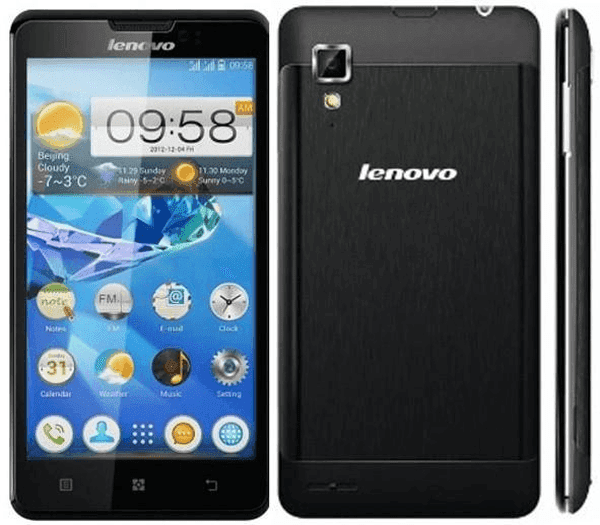

This post mainly introduces the general approach to set a password on Lenovo smartphone step by step.

Step 1: Open Settings.
FYR, you can touch the bottom-left Menu Key and select Settings in the pop-up menu.

Step 2: Choose All settings on the top right corner.

Step 3: Locate and access Security.

Step 4: Click Screen lock to move on.

Step 5: Select Password from the options.

Step 6: Enter at least 4 characters to be a password and click Continue when done.

Step 7: Re-enter the password and tap OK to accomplish the setting task.


Related Articles:
  • Lenovo Android USB Drivers
  • How to Set Password on Lenovo A850/A850+
  • How to View Deleted Text Messages on Lenovo A-series Android

Read more »

Friday, April 3, 2015

Xiaomi might work on its Project Ara


The photo represents the actual "Project Ara" sponsored by Motorola. It was mainly inspired by the Phoneblocks buzz.

It is a revolutionary concept build from modular parts which have specific functions like one for the CPU, another one for the internal storage, etc... You upgrade only what you need, for example, if you need more RAM, instead of the 1 GB part, replace it with the new 3 GB part.

Lately, Xiaomi CEO, Lei Jun said on his weibo account that such an idea was discussed and they are now debating whether to pursue this or not.

Source
Read more »

Thursday, April 2, 2015

Google working on another messaging service for emerging markets

Google is reportedly working on a new messaging service for the emerging markets. It will compete against services such as WhatsApp, which is especially popular in India, along with Line, WeChat, and Viber.

One would wonder though as to why Google would bother with another service when it already has Hangouts, which replaced the previous Google Talk service. The new service will reportedly not require having a Google account (probably will just use your mobile number like WhatsApp). It will also have support for local languages and voice-to-text messaging.
Still, all things considered, one has to wonder why Google wouldn’t just push for Hangouts adoption. The company recently launched the Android One series of devices in India, which would shortly be available in other Asian countries. These devices definitely require a Google account to be able to download and use apps. Then one has to wonder why wouldn’t they just use Hangouts.
Read more »

‘Metal Samsung Galaxy Alpha in full regalia seen on pictures’ – NU nl

The device according SamMobile launched on 13 August. Previously named the usually reliable rumors site today as launch date.

The black variant of the Galaxy Alpha showed. Already on photos Pictures of the white version showing the device from all sides. Include the metal edge that runs all the way around the unit is so good to see you.


720p screen

The Galaxy Alpha would get a 4.8-inch display with 720p resolution, a pixel density of around 385 ppi would yield. The processor would octacore Exynos 5433 is a chip that is rumored would come. In a version of the Galaxy Note 4

In addition, the unit would receive 2 GB RAM and a 13 megapixel camera. Like the Galaxy S5, the phone would have a fingerprint scanner and heart rate. Unlike many other Samsung phones built-in storage memory of the Galaxy Alpha would not be extendable.


Yet plastic

In the leaked photos is to see that the back of the Galaxy Alpha removing apparently, just like virtually all current Samsung smartphones. That would allow the replacement of the battery, a feature that supports fewer smartphone makers. It is not clear whether the back is made of metal or plastic with leather-look, as some recent Samsung phones.

Around the launch of the Galaxy S5 were also many rumors about the Galaxy F , an alleged high-end Samsung smartphone with full metal body. Those rumors have died down recently

The Galaxy Alpha would have to compete with the iPhone 6 who would get a similar screen size of 4.7 inches

Summary:… Photographs and rumors the Galaxy F

This is how the iPhone 6 out show

LikeTweet
Read more »

40 000 Redmi 1S Smartphones to Go on Sale via Flipkart Today at 2pm IST


Xiaomis budget Redmi 1S smartphone, priced at Rs. 5,999, will be available in its second flash sale in India starting 2pm IST on Tuesday at Flipkart for registered users.
Xiaomi has already confirmed that 40,000 Redmi 1S units will be again available for sale on Tuesdays flash sale.
(Also see: Xiaomi Redmi 1S Review | Pictures)
Xiaomi, continuing the flash sale trend started with the Mi 3, had sold the entire40,000 units inventory in 4.2-seconds last week, and once again, there were thousands of unhappy Xiaomi consumers who never got their hands on the device.
(Also see: The Rs. 5,999 battle - Xiaomi Redmi 1S vs Asus ZenFone 4 A400CG)
Flipkart, the exclusive online retailer of Xiaomi handsets in India, now claims that over 300,000 people have registered for the second flash sale of the Redmi 1S. The Flipkart page clearly notes that "Registrations will not be carried over. You need to register again for next sale." Considering that limited stocks of the Redmi 1S will be available in India, the popular e-commerce giant has revealed that it will limit orders to one phone per registered email ID per sale.

Last week, Hugo Barra, Vice President of Xiaomi Global had revealed that the Redmi 1S would come with a complimentary Micro SIM-card adapter and a screen protector, and that orders will be delivered in 7-10 business days. The Flipkart page notes, "Freebies will be delivered separately post your handset shipments."
xiaomi_redmi_1s_flipkart_flash_sale2.jpg
The company, also referred to as Chinas Apple, had reportedly discontinued the Mi 3in India to focus on the Redmi 1S.
The dual-SIM Xiaomi Redmi 1S features a 4.7-inch 720x1280 pixel IPS-LCD display; Android 4.3 Jelly Bean with MIUI v5; 1.6GHz quad-core Snapdragon 400 SoC (MSM8228); Adreno 305 GPU; 1GB of RAM; 8GB of built-in storage; expandable via microSD card (up to 32GB); 8-megapixel rear autofocus camera with flash; 1.6-megapixel front-facing camera, and 2000mAh battery.
Xiaomi Redmi 1S

Xiaomi Redmi 1S

Rs.5999
  • Design
  • Display
  • Software
  • Performance
  • Battery life
  • Camera
  • Value for money
  • Good
  • Great battery life
  • Class-leading camera performance
  • Good display
  • Bad
  • Available RAM for apps is low
  • Boring design
Read detailed Xiaomi Redmi 1S review

Read more »

Wednesday, April 1, 2015

“Samsung announces Galaxy S6 on 1 March ‘ NU nl

According to a invitation that Samsung has sent to the press.

The Samsung Galaxy Unpacked event takes place on March 1, just before the Mobile World Congress. Samsung Galaxy S5 also presented last year during the week of the Mobile World Congress.

It is expected that Samsung for the Galaxy S6 also will introduce an Edge variant with a curved screen. This is reinforced by the invitation that Samsung has shipped, which is hinted at a curved shape

. <- Block |! Image end ->

The Galaxy Note 4 with an Edge-variant appeared . The screen runs at an Edge device over the edge and displays notifications and shortcuts apps.

The Galaxy S6 would a metal design, 5-inch screen with a qHD resolution of 2560 by 1440 pixels octacore processor and 3GB of RAM available

Galaxy S6. All expectations and rumors

These are the expectations of Mobile World Congress

By: NU.nl

LikeTweet
Read more »

Micromax A114 Canvas 2 2 with 5 inch display Android 4 2 listed on official site

Micromax has introduced its next mid-range phablet, the A114 Canvas 2.2 for the Indian market. The domestic handset maker has listed the Canvas 2.2 on its official site, though it has not revealed the pricing and availability details.
Earlier on Monday, the Micromax 114 Canvas 2.2 was spotted at an online retailer with a pricing of Rs. 12,999.
The Micromax 114 Canvas 2.2 runs Android 4.2 Jelly Bean and is a dual-SIM phablet (GSM+GSM) with support for Micro-SIM cards instead of regular SIMs. It features a 5-inch qHD IPS display with a 540x960 pixels resolution. The phablet is powered by a 1.3GHz quad-core MediaTek MT6582M processor along with 1GB of RAM.
It sports an 8-megapixel autofocus rear camera accompanied by a flash and also includes a 2-megapixel front-facing camera. It comes with 4GB inbuilt storage, which can be expanded up to 32GB with the help of a microSD card. The Micromax 114 Canvas 2.2 packs a 2000mAh battery which, as per the companys listing, can deliver up to 7 hours of talktime and up to 290 hours standby time. Connectivity options on the phablet include Bluetooth, Wi-Fi, GPRS, EDGE, GPS/ AGPS and 3G. The Canvas 2.2 measures 145x73x9.7mm and weighs about 147 grams. It also includes a host of sensors like G sensor, light sensor, and proximity sensor.
Earlier, Micromax launched a budget smartphone, the Bolt A61. The entry-level Micromax Bolt A61runs Android 4.1 Jelly Bean out-of-the-box. Micromaxs new budget Android smartphone is a dual-SIM (GSM+GSM) device with dual standby support. It comes with a 4-inch TFT display with 480x800 pixels resolution, and is powered by a 1GHz Spreadtrum SC7710 processor along with 256MB of RAM.
It includes 512MB of inbuilt storage, which is further expandable up to 16GB via microSD card. The Micromax Bolt A61 sports a 2-megapixel rear camera with LED flash and also includes a VGA front-facing camera. The device packs a 1500mAh battery that the company claims can give a standby time of up to 160 hours, and up to 3.5 hours of talktime.
Read more »

Tuesday, March 31, 2015

Samsung is working on virtual reality glasses for Galaxy devices – Android Planet


<- Ad Injection mfunc include fashion ad code -> <-! Mfunc include_once(/var/www/nlandroid-dinman/wordpress/current/wp-content/plugins/ad-injection/adshow.php) -> <--/mfunc-->

Samsung! virtual reality glasses Samsung working on a virtual reality goggles specifically for its Galaxy devices specifically designed for playing Android games. Engadget reports that, after the rumor is confirmed. Various U.S. media

The virtual reality glasses would be comparable to the Oculus Rift. This virtual reality glasses from the same company makes a stir in the gaming world. Also Oculus recently acquired by Facebook for an amount of $ 2 billion

. <- Ad Injection mfunc fashion ad code -> <- mfunc adshow_display_ad_file_v2 (array (ad_top_4.txt, ad_top_7.txt), array (50,50), array (align =>”, ‘clear’ =>”, ‘margin_top’ => ’10 ‘,’ margin_bottom ‘=> ’15′, ‘padding_top’ =>”, ‘padding_bottom’ =>”), array (), array ()) -> <--/mfunc- -> Samsung

virtual reality glasses

According to sources, the Samsung virtual reality glasses specifically designed for use with Android games. So Flappy Bird in 3D? Or Minecraft? Or the beautiful Monument Valley? We are certainly very curious

The Samsung virtual reality glasses would have an OLED screen, be linked to the Galaxy devices via a cable and get a free soft price -. Device is rumored at least cheaper than the Oculus Rift, which still costs about $ 350 at this time.

the glasses may not work with the successor to the Galaxy S5 and upcoming Galaxy Note 4, because the accessory would appear on the market in 2015.


Read also

(via)

Read more »

What on Earth Is Minecraft 10 Things to Know About Microsofts Billion Dollar Acquisition


With over 54 million copies sold, Minecraft represents the biggest niche audience since gaming itself. News that Microsoft has acquired Minecraft maker Mojang for $2.5 billion should have gotten your attention, so lets take a look at what Minecraft is. The game itself was released nearly five years ago, so this isnt an in-depth explanation - just a quick guide to get non-gamers up to date with what the hype is about.
1. Minecraft is a video game
This should be obvious, but Minecraft is a video game that was first released in an "alpha" state in 2009. You might be familiar with the concept of a beta, where software is released but continues to be developed to remove bugs. An alpha is what comes before the beta - where youre not just testing for bugs but still developing the key features, and creating art, sound and other assets in case of video games.

Minecraft was originally released as a PC game, but over the years as its popularity grew, it was ported to more platforms. Today, you can get Minecraft for Windows, OS X, Linux, Android, iOS, Xbox 360, Xbox One, PlayStation 3, PlayStation 4, and PlayStation Vita.
2. Minecraft isnt really a video game
While Minecraft has many game-like elements, its really much more like digital Lego. The game itself doesnt really have a goal - you can explore the world, and build what you want. In Survival mode - which is the closest Minecraft gets to a game, you have a health bar which can be depleted by attacks from monsters, starvation, suffocation and more events.

minecraft_youtube_screenshot_01.jpg
You can make armour and weapons, and build defences, breed animals and more. Then theres Creative mode, where you have access to most of the resources through a menu, and you can fly around the world. Youre free to build large projects, and just have fun.
3. Minecraft has sold over 54 million copies
Whether you think that Minecraft is a game or not, theres no denying that it is a success. Taking into account all platforms, Minecraft has sold over 54 million copies. You can play Minecraft by yourself and create things on your own, and if you want, you can connect to this huge community in multiplayer worlds, where you can work together to build things.

4. It looks like first-person Lego
Minecraft has a unique visual style that has inspired quite a few imitators by now. Everything is made up of blocks - including your character, and even the water looks blocky. This is a deliberate stylistic choice, although some players use mods to change the way Minecraft looks. Funnily enough, while Minecraft has been described as digital Lego at least partly for this reason, there are now official Lego Minecraft sets you can buy.

minecraft_youtube_screenshot_04.jpg
5. There is mining, and crafting
In survival mode, you start the game empty-handed and need to hit blocks to collect them. So you can hit a tree, and get some wood, for example. Thats the most basic thing you can do though. The next step is to use the crafting grid to turn those blocks of wood into planks. From there, you can turn the planks into a crafting table, where you can make more complex items - such as a wooden axe, with which you can get wood faster. Keep crafting and your mining becomes better.

The more you mine, the more materials and combinations become possible, and after that, you can start to build highly complex structures. People have made reproductions of Hogwarts and real world locations like the Eiffel Tower, giant Marios bestriding the blocky tiles, and even simple towers to protect themselves. Using special "redstone" blocks that can have more than one state, people have built calculators and even computers, investing a huge amount of time and effort to work it all out and then put them together.
6. You can play Minecraft inside Minecraft
You know how we mentioned that using redstone blocks you can create binary switches and make computers? Setting up several thousand of these blocks, some people have even made a very basic 2D Minecraft that you can play - inside Minecraft. The scale of the work required to do this honestly boggles the mind, and thats just putting it all together.

minecraft_youtube_screenshot_02.jpg
First, someone had to figure out how to make this whole system of tens of thousands of bricks to work together.
7. The world of Minecraft is 9 million times the size of Earth
The world of Minecraft is theoretically infinite - the areas are made up of chunks that are loaded as required. There are some technical limitations to the total space possible, and therefore, the total surface area is 4.7 quadrillion kilometres squared. The Earth is "just" 510 million kilometres squared, making Minecraft effectively over 9 times bigger.

8. Minecraft helped popularise the "early access" model
Today, paying for a game that is still a work in progress isnt a big deal. Theres Kickstarter of course, where you might pay for something thats barely an idea. And then theres something like Steam Early Access, where you can pay for games that are still being made.

minecraft_youtube_screenshot_03.jpg
Minecraft is probably the most famous example of the trend - players could buy the game in the initial development stages, the alpha and later the beta, all the way up to the final release. At each stage, the cost of the game went up, but if you bought an older version of the game, you were assured a copy of the final game at no additional cost, along with other benefits. Games like DayZ would come along later and cement the model, but Minecraft is certainly one of the games that set the early trend.
9. Minecraft has a huge fanbase, with merchandise and meetups
There are Minecraft conventions, including the official one - MineCon, which has taken place in locations like Washington, Las Vegas, Disneyland Paris and Orlando, Florida. These events were heavily attended and show how involved the community is. On the Minecraft website, you can buy a lot of merchandise as well, ranging from soft toys to vinyl figures, foam swords, blocky torches, mugs, posters and clothes.

Minecraft might have started as a digital distraction, but it is very much present in the real world today.
10. Minecraft has applications well beyond Minecraft
Minecraft has been discussed as a teaching tool for Computer Aided Design, and for other educational tasks. It can be used to build virtual designs for 3D printers, for example. This year, the Danish Geodata Agency recreated all of Denmark at a 1:1 scale in Minecraft, a virtual world anyone can visit. Minecraft has also been introduced in several schools to teach subjects such as history and science. For example, teachers have taken advantage of the popularity of the game to build multiplayer servers where they can recreate the pyramids, and other monuments, together in Minecraft.


Read more »

Microsoft Likely to Reveal Surface Pro 3 on May 20 2014

There are many rumors that clearly suggests that Microsoft Surface Pro 3 will be launched on May 20, this year, as the whole world is waiting for Surface mini and Surface 3 tablets.
The Tech giant will launch the tablet at £539 and also promises to introduce the 4G LTE version this time in UK. A Redmond based company has held a conference on May 20 and it is expected that surface mini will be launched in that conference.

It is also rumored that Microsoft will also launch their latest device, Surface Pro 3. Microsoft has also launched 4G LTE version in UK and is also available in the US.

For More Speculations, Check-Out This Video


According to Bloomberg and much publicized news, software giant Microsift is going to launch multiple surface tablets, including the promised surface mini. According to CNET, this time Microsoft is coming out with a new fresh tablet powered by Intel.

About Anna Harris:
Anna Harris working as web content writer and a strategist for a major IT firm specialized in various mobile application development services for iOS, Android, Windows Phone and other operating systems.

Follow Anna Harris On
Read more »

‘Samsung Galaxy S6 and S6 Edge coming on March 2 “ Hardware Info

Set Background

Restore Default

Hardware.Info uses cookies. View our cookie policy.

LikeTweet
Read more »

Sunday, March 29, 2015

Apple Watch is On The Verge To Get Launch

Apples banking on its Apple Watch to be a success but component issues may plague the launch, expected in March, according to an analyst.


Apple has so far been vague about the exact release date for the Watch, only describing it as "early 2015," pointing to a launch in February or March. Rumors have suggested the the smartwatchs battery life will be comparable to other devices in the category and require nightly charging.

Apples devices generally sell out upon release and it seems Apple Watch will be no different but Kuo said that component issues may cause supply problems for the watch. He expects Apple will sell 2.8 million Watches in March, and sell a total of five million devices in the first quarter of 2015.


The Apple Watch will come in three variants, each expected to differ in price point. The standard Watch will come in stainless steel, with the Apple Watch Sport in silver or space grey aluminum and the luxury Watch Edition will be available in rose or yellow 18 carat gold .

"Apple Watch is right there on your wrist, so it makes all the ways you’re used to communicating more convenient. And because it touches your skin, we were able to add a physical dimension to alerts and notifications – you’ll feel a gentle tap when you receive an incoming message,” Apple says of its most personal device.

Apple Watch is on the Brink to Launch


“Apple Watch also allows you to connect with your favorite people in some new, spontaneous ways not possible with any other device.”

About Anna Harris:
Anna Harris working as web content writer and a strategist for a major IT firm specialized in various mobile application development services for iOS, Android, Windows Phone and other operating systems.

Follow Anna Harris On
Read more »

Saturday, March 28, 2015

Samsung Galaxy S6 import data appears on screen 5 inch

Samsung


We are exactly one month from the Mobile World Congress 2015 home, which means that we are one month of one of the events leading technology in the world begins, as is the scenario that many large manufacturers choose to publicize the world their new smartphones that will represent this year is just beginning. One of the manufacturers homes is causing more excitement is Samsung, it is expected that the Galaxy S6, successor to the throne of South Korea, is presented and come with a flurry of improvements designed to make a firm stand firm in the market.


Samsung


 But while this rumor becomes a reality, more and more information comes to light to make life a little more pleasant waiting, the last filter you can see on these lines. This is the record of importing a Samsung smartphone, model SM-G920V, and it is supposed Galaxy S6, which come with a 5-inch screen, slightly reducing its size compared to its predecessor.


 Important to remember that this could be a prototype and the final model could reach a different screen diagonal, then the information should be taken with care. Regardless of the size of the display, the new flagship of Samsung is expected to come with an Exynos 7420 processor, due to the many problems it had with Qualcomm, 3GB of RAM, and network connectivity to LTE Cat. 10 main cameras 20 Mpx and 5 Megapixel front, all in a body made entirely of metal.


Samsung Galaxy S6 import data appears on screen 5 inch
Read more »

Microsoft Surface 2 Hands On review


It was the company’s answer to the iPad — but not exactly, since the closest thing it had to a killer feature was the a flip-out kickstand and optional keyboard covers which let you use it like a laptop.
And it was also a PC — but not quite, since the only conventional Windows software it ran was Microsoft Office and a few other preinstalled apps.
It was, in short, hard to pin down.
One year later, the sequel – Surface 2 — is here. Microsoft is calling it “the most productive tablet on the planet,” which downplays direct competition with the iPad in favor of carving off a new niche. But even though the niche makes sense for Surface to tackle, this device doesn’t go all the way toward fulfilling it.
What’s most interesting about Surface 2 is pretty much what was interesting about Surface RT, which is quite a lot: the kickstand, the keyboard covers, the full copy of Microsoft Office which comes preinstalled. It has a USB port and a MicroSD slot, providing opportunities for expansion and customization — such as the addition of a mouse and extra storage — which the iPad has famously written out of the picture.
Above all, what’s significant about the new Surface remains the fact that it runs Windows RT. The operating system has the same touch-friendly, stylish Metro interface as Windows 8, and runs new-style apps from Microsoft’s Windows Store. It has almost nothing in common with any previous version of Windows — it can’t even run the third-party applications which they can — and is also distinctly different from the iPad and Android tablets. Whether you find it bold or befuddling, it’s not more of the same.
As it did last year, Microsoft islaunching two variants on this concept. Surface 2 is available in a 32GB model for $449 and a 64GB one for $459 (neither price includes a keyboard cover). It’s arriving alongside Surface Pro 2, a largely similar — albeit thicker and heavier — device which includes Windows 8.1 and comes with a nifty pressure-sensitive pen for note-taking and doodling. Surface Pro 2 starts at $899, twice the price of the most basic Surface 2. But it also runs classic Windows apps, from your favorite games to full-strength Photoshop, making it a plausible primary PC for more folks. (My colleague Jared Newman bought one and tells me he’s pretty pleased with it overall.)
The original Surface RT remains on the market, too. It’s now simply known as Surface, and is a $349 budget special.
Most of Surface 2′s hardware changes compared to that first Surface are minor — sometimes exceedingly so. The case is still made of magnesium, and still looks classy and feels solid, but now it’s a light gray rather than the darker shade of the original model. Microsoft touts Surface 2 as being “leaner” than its predecessor, but at 0.35 of an inch thick and 1.49 pounds, it’s only slightly over 0.02 of an inch thinner and less than one-fifth of an ounce lighter. That reduction in bulk feels like a rounding error, especially in comparison to Apple‘s newly downsized iPad Air.
Other upgrades are more meaningful: The new Surface sports a faster processor than the Surface RT and a pleasing new 10.6-inch display with the same resolution as the Surface Pro 2: 1920-by-1080 pixels. The kickstand now pops out to two different angles: 22 degrees (like the original) or 55 degrees (designed, Microsoft says, to work better if you’re balancing this newfangled laptop in your lap). The front- and back-facing cameras offer higher resolution and better performance in murky lighting; the USB port supports USB 3.0, the zippy current version. Estimated battery life is now 10 hours, up from eight for the first Surface; in my informal tests, it at least came close.
The Surface 2 which Microsoft provided to me for review was equipped with the second-generation version of its $130 Type Cover. It’s one millimeter thinner than the first version, sports backlit keys and permits quieter typing. Like all Surface covers, it snaps on and off in a jiff via a magnetic connector on the tablet’s edge and doesn’t require its own battery or any setup. It’s not perfect — the touchpad is still too dinky and tough to manuever — but overall, it’s the best tablet keyboard I’ve ever used.
I didn’t try the $120 Touch Cover 2, which sacrifices discrete keys for a flatter, thinner, one-piece keyboard; it’s also added backlighting and uses 1,092 sensors rather than the original’s 80 sensors to provide better typing accuracy. Early next year, Microsoft also plans to ship a $200 Power Cover, which is exactly what it sounds like: A keyboard cover with a built-in battery which can provide extra juice to extend the Surface’s run time.
So that’s the Surface 2 hardware: refined, but not redefined.
The tablet’s operating system is Windows RT 8.1 — that is, Windows RT with Windows 8.1′s improvements — and that’s a reasonably big deal in itself, as long as you find the basic idea of the new interface intriguing rather than off-putting. (The update is also now available on the original Surface.) Not only can you run two apps on screen at once — an option which the iPad, of course, doesn’t offer — but you can adjust their size. SkyDrive, Microsoft’s online storage service, is more seamlessly built into the OS, permitting you to store more of your files in the cloud without giving it much thought. The new-style Start screen now lets you organize your apps with more flexibility, and the search feature finds stuff across your device, the Web and elsewhere.
Microsoft also throws in a few new freebies with the Surface 2 which are actually worth something. It comes with a roomy 200GB of storage of SkyDrive online storage — available on all your gizmos, not just the tablet — for two years. For the first year, you can also use Skype to make unlimited calls to landlines, and get gratis connections to two million Wi-Fi hotspots around the world.
The bundled version of Office which comes with Surface has one big change which will matter a lot to some worker bees — it now comes with Outlook, the Microsoft e-mail program which is standard equipment in many businesses. Outlook, Word, Excel and PowerPoint offer Office’s signature benefits: almost every feature you can imagine, and perfect compatibility with the files your coworkers create in other versions of Office. Nobody will ever accuse these apps of being underpowered, which isn’t true of most productivity software for other tablets.
But as with last year’s Surface, Office isn’t an unalloyed plus for Surface 2. All of these programs still use the old-school Windows interface, modestly updated to work with touch input. They sit on a vestigial version of the classic Windows desktop, and never quite feel entirely at home. For instance, they don’t deal well with being shrunk down to share screen real estate with other apps — sometimes information runs off the display or gets hidden by a scroll bar. And if you’re using the tablet with the on-screen keyboard and pop open an Office app’s Ribbon toolbar, the viewable portion of your document is reduced to a tiny sliver.
Basically, using Office on the Surface 2 leaves you craving a version of Office designed with the new interface in mind. Microsoft says that one is on its way, though it isn’t yet being specific about when it might show up.
Third-party apps do at least as much as anything preinstalled to determine what you can do with a device, and it’s de rigueur in reviews like this one to point out at least one major app which isn’t available in Microsoft’s Windows Store. (Here’s one: Candy Crush Saga.) Still, after a year of operation, the store shows signs of life. Among the 100,000-plus apps it offers for Surface 2 are nice official versions of Facebook, Twitter and eBay. Foursquare may be better than it is on any other platform, and Flipboard is on it way.
Yet when it comes to productivity — the subject which Microsoft has chosen to play up as Surface’s defining virtue — the pickings remain surprisingly slim. In categories where the iPad offers multiple solid options, such as blogging apps, you’re lucky if the Windows Store has anything at all. Programs such as Adobe’s Photoshop and Autodesk’s Sketchbook are available only in basic versions, not the much meatier editions available for the iPad and Android tablets.
It’s not that it’s impossible to build a good productivity application which will take full advantage of the Surface 2. Microsoft’s OneNote — one Office app which is already preinstalled in a Metro version — is just fine. I also like Back to the Drawing Board, a computer-assisted drafting program. Jared recommends a music app called FL Studio Groove. There are other examples, too, just not enough of them. (Sadly, TouchMail, an e-mall package which I got excited about in preview form back in April, remains a preview: It doesn’t let you access your own accounts.)
I’m still rooting for Microsoft to get Surface right, and I figure that it has at least another year before the platform faces anything like an existential crisis. The good news is that Surface doesn’t really need more pixels or additional kickstand angles or a beefier battery: If Microsoft ships a well-done Metro version of Office and convinces more developers to write top-notch productivity apps, Surface 2 will feel like a whole new computer, no hardware upgrades required. But without them, it’ll continue to feel incomplete.

Read more »

How to free up space on your iOS device
Computers used to be all about expandability. Essentially you owned a box that could be tailored to your needs as your requirements evolved. A popular upgrade path was storage, adding new hard drives as your files grew in size and number. But with Apples touchscreen revolution, everything changed.


The iPhone, iPad and iPod touch are more like appliances than traditional computers - theyre sealed boxes that forever remain as they were the moment you purchased them. You can no more extend their storage capabilities than you can add a new compartment to your fridge-freezer.

A quick look at Apples modern hardware suggests its entire line-up is heading in the same direction, but iOS devices are more restricted than Apples desktops and notebooks. After all, if you need more storage for a MacBook Air, you at least have the option of offloading large documents to an external hard drive (and, of course, then sensibly backing up that data along with the internal drives, either locally or to an online service such as CrashPlan).

But iOS devices arent designed that way. They dont have a USB port or a user-accessible file structure. The intention is that you store everything on the device itself (well, almost everything - services like iTunes Match enable you to grab your music from the cloud).

Therefore, an important tip when it comes to better iOS device storage and management comes at the moment of purchase: buy the model with the most storage that you can afford, unless youre absolutely convinced you wont need it.

Even then, reconsider; be mindful that as technology evolves, demands for storage increase. Retina screens require larger applications, and iOS cameras can shoot HD video, which requires a huge amount of space.

Also, demands on iOS devices are increasing purely on the basis of what they can now do. People frequently shoot and edit video, work with photography, read magazines and compose music on iPads and iPhones. All these things require lots of storage.

If your device gets really full, it alerts you. Also, things stop working. You wont be able to install new apps or shoot video new footage. You may find that updating apps becomes problematic, because the device doesnt have enough space to download, unpack and install updates before deleting older versions.

We offer advice for dealing with such a situation, along with managing iOS storage in general. Note that this isnt intended as a start-to-finish walkthrough, more a series of ideas that can be utilised to free up space.
As ever, we should stress the importance of back-ups before making major changes to iOS devices. Even if youre backing up to iCloud, make the occasional local back-up (select your device in iTunes and click Back Up Now on the Summary page).

Local backups are also useful when it comes to dealing with app data, because you can later use iExplorer to fish out settings and other documents from such a backup, even if those things have long been removed from your device. Also ensure before making any major changes in terms of deleting content that you dont only have said content on your iOS device.

For music, sync your device with iTunes to transfer tracks to your Mac (although you can grab previous purchases from iTunes, if necessary). For photos and movies, transfer them across by attaching your device to your Mac via USB, launching iPhoto, selecting the device and clicking the Import button.

How to manage iOS device storage


1. Check device capacity in iTunes

Although iOS devices no longer require iTunes, Apples desktop app remains useful from a device management standpoint. Connect your device (via USB or over Wi-Fi) and select it from the Devices button. Across the bottom of the window, you see a chart detailing whats taking up room: audio, photos, apps, books and other.

If storage is an issue, you could free some up. For example, if youve lots of music or photos on your device, select the relevant tab, uncheck the sync box and then sync your device. The relevant media is removed. You can then perform updates and manage your apps, perhaps free up more space, and later restore your media by resyncing it.

Occasionally, you might find the other section becomes massive. In our experience, this is usually down to you having a lot of in-app data (see Step 3) or failed app updates, which can happen on trying to update without enough free space. Resyncing should help; if not, a restore from a local backup.

2. Discover app sizes 

Apps can be massive. Sizes are shown in iTunes and the App Store, but thats the size of the compressed download. Once installed, an apps size can balloon.

In iTunes, check app sizes by clicking on the Apps tab and selecting Sort by Size from the pop-up menu at the top of the apps list. Peruse the list, and if there are apps or games you no longer use, consider deleting them. You can do so by clicking Remove in iTunes; when youve done so for all apps youd like to delete, click Sync.

Alternatively, tap-hold an app on your device to make all the icons jiggle and, for each, tap the cross icon and then Delete to remove it.

3. Examine app data

Open the Settings app on your device and in the General category, select Usage. You see available and used storage and a list of apps. These are ordered by the total amount of space they require, including app data.

Newsstand and similar apps tend to be storage-hungry. Their containers might be small, but the actual magazines rarely are. If you want to see how much space an apps data is using, tap the app in the list and look at the Documents & Data figure.

If youve several such apps taking up loads of room you need, consider deleting data. For example, if you subscribe to magazines, delete old issues from within each app. You can usually redownload issues later if you need to. If you fancy taking a speedy option and dont have a capped broadband connection, deleting a Newsstand app takes all its data with it. You can then download a fresh copy from the App Store and the latest issue.

Magazine and book apps arent the only storage culprits, note. Dropbox can (optionally) store documents locally (by flagging them as favourites) and some video apps have download capability, so check those too.

4. Back-up app content

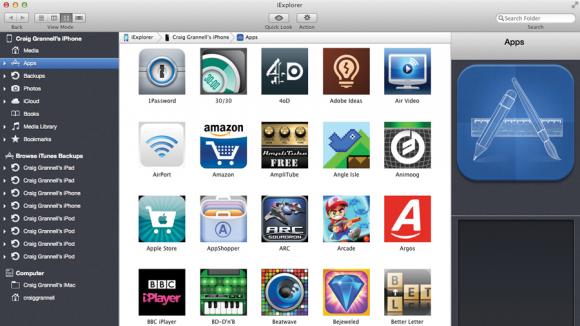
Should you no longer use a game or creative app, but think you might one day return to it, download its data to your Mac using the free version of iExplorer (macroplant.com/iexplorer).

Connect your device to your Mac via USB, select Apps from iExplorers sidebar and select the app in question. Select the Documents and Library folders, Ctrl-click and select Export to Folder. (Alternatively drag them to a Finder folder.)

The contents of these folders can later be sideloaded into a fresh install of the app, meaning you wont lose your progress in a game that doesnt support iCloud, or could get saved compositions from a music-app back to your device with a minimum of fuss.

5. Use last-chance folders

If you tend to frequently download new apps, chances are some fall out of favour, but you might not necessarily know which. Create date-based folders (07-2013, say) and place apps within that you dont think you use any more. If you find yourself using one, rescue it from the folder. Otherwise, delete the folders contents after a few months, first backing up app data as necessary.

(Note: if you dont download apps to iTunes on your Mac, sync with it before deleting the apps, so youve a back-up you can later install to your device. You can of course redownload apps from the App Store, but only if they are still made available to you.)

This is a fairly ruthless app-management method, but its useful for keeping installs current and ensuring you have space.
Read more »

How Little Changes Can Have Big Impacts on Apps and Services


Sometimes, something as simple as the design of an Order Now button can drastically affect the success of your big idea. Should you trust your intuition and hope for the best, or carry out test after test to figure out what the customers want? At a Nasscom panel to discuss customisation and integration - moderated by NDTV Gadgets Editorial Head Kunal Dua - we discussed this and more with various industry experts.
According to R Chandrashekhar, President, Nasscom, intuition is what you use when you run out of data, and that good business requires both data and intuition. "Intuition will tell you what the options are, while data can tell you which one works best," says Chandrashekhar.
Tanuj Mendiratta, Co-Founder and CEO, Appiterate, provides an example that underlines Chandrashekhars point. Appiterate is a company that allows developers to do A/B testing of design on live apps, with India-based taxi company Olacabs as one of its clients.
"Olacabs wanted to turn usage into referrals," says Mendiratta. "They had been trying to make sense of data to increase their footprint on mobile, so they partnered with us in order to strengthen their data science and leverage it to improve user acquisition."
One of the options that the company tested involved a small change is the design of the invite button that resulted in a 55 percent increase in invitations being sent out, and a 33 percent increase in user acquisition, Mendiratta claims.
Emphasising the importance of design in success - or failure - of products, Muki Regunathan, Founder and CEO, Pepper Square, described how the same experience that Olacabs had, is equally true on the Web.
"We used an analysis backed approach, and on one of the projects that we were working on, all we did was change the shape of the call to action button. This one small change led to an increase of 250,000 tickets."
Testing design and content features is a well-established field, and there are several companies that work in this area now. Appiterate - which received VC funding earlier this year - is just one of them, but the Gurgaon-based company already has an impressive client roster, including Spice Labs, Ibibo, Reviews42, Taxi for Sure, and of course Ola.
The company claims to be the only A/B testing product that has a simple drag and drop interface that any business can use to easily test its apps. These changes can be made to live apps, so that the testing is done in real market conditions, and real user behaviour can be studied to gain data.
However, real change to the user experience will only come once this data is shared between different apps, leading to a greater degree of personalisation, instead of customisation, says Ravi Gururaj, Chariman, Nasscom Product Council, and Chairman and Co-Founder, Frictionless Ventures, a funding and incubation company with a focus on cloud, mobile and big data software product ventures.
"The new customisation is going to be personalisation," says Gururaj, "And what will happen is that you will get app-like experiences inside apps. Youll have containers, that bring together a lot of different functionality instead of needing lots of disparate apps."
One roadblock in India towards this end is the slow uptake of API use by developers. Chandrashekhar also points out that as long as companies try to control linkages, developing new ideas will remain a challenge.
"Real growth will come through organic partnerships," he says, "with people who you have never even heard of."
"People are not open to opening up," says Gururaj. "But integration is the norm. No one can make an end to end product now. Even the phones you use, they come from so many different vendors. Then there is the app ecosystem, which is in turn supported by more ecosystems. [People need to] learn to grab and deliver value to the ecosystem."

Read more »

Friday, March 27, 2015

How To Never Run Out of Battery Power On Your Smartphone or Gadgets Again


There is a way to never lose power on your smartphone, making sure your smartphone battery never runs dry. What if I told you that I only plug my devices to mains power about once in 3 days even when I heavily use them?


Everyone knows that even as technology is advancing at a super-fast rate, one area that has not really advanced to the level it should have is Battery. Phones have gotten slicker and better over the years, screens, memory, hardware and operating system have gotten better as time progresses, however, battery used in powering these devices havent gotten any big upgrade.


Batteries are very important in our age. Well, one way to make sure that your device is usable and doesnt die on you is to have the battery charged and have a way of recharging when you are not close to electricity. Enter Power Banks.


A lot of power banks these days are inferior and can even damage battery or device. Some are not capable of charging some devices like iPad 4 or iPad mini that consume high current to charge them.


However, NOMAD chargers, which I have had the privilege of using for some weeks now are able to charge any device, be it iPads, smartphones, Handheld game consoles, speakers to name a few. Am so loving my Nomad chargers! The good part, even you reading this would get it with a discount. check below for discount code.


Why am I writing about this now? Well, a lot of people actually need this but are not sure of what power bank to buy, one that would serve them efficiently without creating problems. Also, someones Blackberry device was badly fried due to substandard Power Bank connected to the device.


A fully charged NOMAD Power Storing Charger can charge your smartphone battery full 3 times over, charge your tablets 3 times full and even your handheld console 3 times full.


This means that, when you use your device and it runs down, you can charge it up with the NOMAD charger. If you drain the smart device again, you can still charge up your device battery again without worrying about charging your NOMAD charger before it can charge you device battery. A discount code for my readers is provided below.


One beautiful thing about the NOMAD charger is that it’s of several types. There is one that has 5 ports to charge up to5 devices at the same time. This has a power rating of a whooping 11000mAh high capacity battery for long term backup!. Furthermore, it has 4 different output rating for phones and tablets and it comes with self-charging powered USB port or from DC to charger.


The Single port NOMAD charger comes with 5200mAh high capacity battery. In fact, this was what sold me. Most power banks are around 2100mAh and can last 3hrs before they give up. But, NOMAD chargers would last you 12hrs before needing a recharge.


Just like the 5 ports NOMAD charger, the single port NOMAD charger comes with self-charging powered USB port or from DC to charger.


One more plus for these NOMAD chargers: It supports all Smartphone types; Blackberry, NOKIA, Samsung, Motorola, Apple etc and comes with pins.

For those that are learned in the technical area of battery specifications, the following may interest you.

NOMAD 5200mAh has the following Specifications:
  • Battery Type: Li-Ion
  • Capacity: 5200mAh
  • Input: Micro USB 5V/1000mA
  • Output: Micro USB 5V/1000mA
  • More than 800 life cycles
  • Can retain 80% of battery life even when stored for 3 months
NOMAD 11000mAh has the following Specifications:
  • Battery Type: Li-Polymer
  • Battery Capacity: 11,000mAh
  • Input 1: Micro USB 5V/1A
  • Input 2: 9-12V/1A DC charger
  • Output 5x USB 5V/2A (USB 1: 5V/1.3A, USB 2: 5V/2.1A, USB 3/4: 5V/1A, USB 5: 5V/0.5A


Why go out of battery power ever again? If you are like me that travels a lot and never wants his phones to die out, a NOMAD charger is what you need.


They are very affordable, light, easy to carry and very reliable.


You can order one now by visiting www.nomadcharger.com and it would get delivered to you anywhere you are. Oh, and Phonegist readers get a discount.

For our readers, discount code is PGISTRDR1Follow us on Twitter and Like us on Facebook for prompt info.


Read more »