Friday, May 22, 2015
iOS 7 0 4 Activity Ramping Up at Apple Ahead of Next Minor Software Update

Apple unsurprisingly appears to be ramping up activity on iOS 7.0.4 as the next version of iOS to see a release to the public, with MacRumors seeing increasing numbers of devices running iOS 7.0.4 from Apples networks showing up in web logs.


As we previously noted, iOS 7.1 devices from Apples network began showing up in our logs in late August, and while visits from those devices increased during October, they have declined somewhat during the first week of November. iOS 7.1 would be expected to bring a more substantial number of updates, but it appears that a public launch may yet be some time off with Apple working on a smaller iOS 7.0.4 release.
iOS 8 continues to show very low levels of activity in our logs, with the next major version of Apples iOS software undoubtedly still in the very early stages of development and a public release roughly a year in the future.
Data source: via MacRumors (By Eric Slivka)

Friday, April 3, 2015
Zenfone 2 Close up ZENUI Camera Review
Today at 7.00 pm GMT ASUS CEO Jerry Shen announced ASUS Zenfone2 and ASUS Zenfone Zoom at CES 2015 in Las Vegas.
ASUS today unveiled ZenFone 2 (ZE551ML), the flagship smartphone in the new-generation ZenFone family. With a gorgeous all-new ergonomic design, a 5.5-inch Full HD IPS display, 13MP/5MP PixelMaster cameras, a 2.3GHz 64-bit Intel Atom processor with 4GB RAM and 4G/LTE connectivity, ZenFone 2 delivers powerful all-round performance.
Fast Review:
.jpg) |
| Red Doff Zenfone 2 |
.jpg) |
| Gold Metal Back Case Zenfone 2 |
.jpg)
.jpg) |
| Power Button/Lock at the Top Zenfone 2 |
 |
| LED Notification Zenfone 2 |
.jpg) |
| ZenUI at Zenfone 2 |
.jpg) |
| Brand New ZenUI Support Themes |
.jpg) |
| ZenUI Camera |
.jpg) |
| Dual SIM Zenfone 2 |
.jpg) |
| Zenfone 2 Cam |
 |
| Zen Motion, Brand New from ZenUI |
.jpg "Asus Zenfone 2 Main Camera | www.asus-zenfone.com") |
| Asus Zenfone 2 Main Camera | www.asus-zenfone.com |
.jpg)
.jpg)

 |
| Asus Zenfone 2 Main Camera Features | www.asus-zenfone.com |
 |
| Asus Zenfone 2 Main Camera | www.asus-zenfone.com |
 |
| Asus Zenfone 2 Main Camera | www.asus-zenfone.com |
 |
| Asus Zenfone 2 Front Camera Features | www.asus-zenfone.com |
 |
| Asus Zenfone 2 Front Camera | www.asus-zenfone.com |
 |
| Asus Zenfone 2 Front Camera | www.asus-zenfone.com |
 |
| Asus Zenfone 2 Front Camera | www.asus-zenfone.com |
 |
| Asus Zenfone 2 HDR Mode Result | www.asus-zenfone.com |
 |
| LG G3 HDR Mode, See The Different with Zenfone 2 | www.asus-zenfone.com |
Tuesday, March 31, 2015
Sony Bravia X90C 4K TV up to 65 inches and thickness of an inch
The Sony Bravia X90C is one of the new proposals for Sony TVs segment in 2015. A team with the latest technology firm but above all known for a really fine thickness of 4.9 millimeters in your area thinner. This series will be available in formats 55 and 65 inch sport a powerful 4K resolution of 3,840 x 2,160 pixels that quadruples the definition of Full HD TVs. And all with the Android operating system for smart content enjoy a bet will become a constant in many manufacturers during this 2015. We have full details on these models.
Undoubtedly, the great attraction of this new series of TVs Sony is in its fineness. And the Sony Bravia X90C has only 4.9 millimeters thick at its thinnest area, thinner even than the first-line smartphones in the market. The series X90C incorporates 4K or UHD, which quadruples the level of detail of traditional Full HD TVs. The Japanese company also wanted to highlight its new image processor 4K Processor X1, able to offer excellent picture quality whether you are watching native 4K content as if we visualize lower resolution content. And the image scaling finishes with much of the noise of the images and allows us to enjoy the movies and life as never before.
The Sony Bravia X90C be available in two formats, one 55 inches (KD-55X9005C model) and another 65 inches (KD-65X9005C). This series also takes advantage of the Sony Triluminos technology with a panel that reproduces more vividly the scenes that weigh heavily basic colors, such as those that take place in nature. More vivid and realistic details Skin details are also achieved. Another technology available is a remarkable frequency of 800 Hz, designed for images go smoother even those action scenes in which there is much movement.
These televisions are still the main trend these 2015 mobile operating systems adapt to the TV. Major manufacturers like LG (WebOS) or Philips (Android) and took the step last year, and 2015 will turn to other companies like Samsung (Tizen) or Sony itself. And the Japanese company introduced the Android platform most of its HDTVs and upper-middle range. This system will allow us greater flexibility to access different applications and games available. Yes, Sony will maintain its One-Flick knob to scroll through menus and various platforms of the company to enjoy movies or games via PlayStation Now. At the moment we have no starting price or date for the Sony Bravia X90C, coming in the first half of this year.
Sony Bravia X90C - 4K TV up to 65 inches and thickness of an inch
Sunday, March 29, 2015
Prevent From Being Waked up by Applications in Deep Sleep Mode
"Prevent the device from keeping awake" means prevent the device from keeping awake caused by applications after the screen is off.
Steps:Go to [Settings] -> [Power management] -> [Power Consumption Table] and tap any application.
Scroll down the page to the bottom and you will find the two functions of "prevent the device from being waked up" and "prevent the device from keeping awake".

The system may be waked up from deep sleep by some applications. Those applications which wake for a long time is the main reason the system is unable to be in deep sleep mode. Therefore, we can check if there are applications that wake up the device frequently from deep sleep mode by the statistics of "Wake up device" and "Keep awake" in Power Consumption Table.

Saturday, March 28, 2015
How to free up space on your iOS device
The iPhone, iPad and iPod touch are more like appliances than traditional computers - theyre sealed boxes that forever remain as they were the moment you purchased them. You can no more extend their storage capabilities than you can add a new compartment to your fridge-freezer.
A quick look at Apples modern hardware suggests its entire line-up is heading in the same direction, but iOS devices are more restricted than Apples desktops and notebooks. After all, if you need more storage for a MacBook Air, you at least have the option of offloading large documents to an external hard drive (and, of course, then sensibly backing up that data along with the internal drives, either locally or to an online service such as CrashPlan).
But iOS devices arent designed that way. They dont have a USB port or a user-accessible file structure. The intention is that you store everything on the device itself (well, almost everything - services like iTunes Match enable you to grab your music from the cloud).
Therefore, an important tip when it comes to better iOS device storage and management comes at the moment of purchase: buy the model with the most storage that you can afford, unless youre absolutely convinced you wont need it.
Even then, reconsider; be mindful that as technology evolves, demands for storage increase. Retina screens require larger applications, and iOS cameras can shoot HD video, which requires a huge amount of space.
Also, demands on iOS devices are increasing purely on the basis of what they can now do. People frequently shoot and edit video, work with photography, read magazines and compose music on iPads and iPhones. All these things require lots of storage.
If your device gets really full, it alerts you. Also, things stop working. You wont be able to install new apps or shoot video new footage. You may find that updating apps becomes problematic, because the device doesnt have enough space to download, unpack and install updates before deleting older versions.
We offer advice for dealing with such a situation, along with managing iOS storage in general. Note that this isnt intended as a start-to-finish walkthrough, more a series of ideas that can be utilised to free up space.
As ever, we should stress the importance of back-ups before making major changes to iOS devices. Even if youre backing up to iCloud, make the occasional local back-up (select your device in iTunes and click Back Up Now on the Summary page).
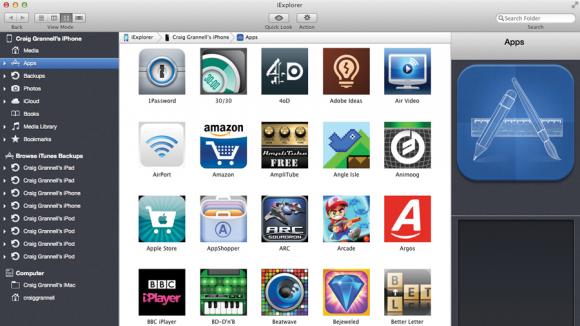
Local backups are also useful when it comes to dealing with app data, because you can later use iExplorer to fish out settings and other documents from such a backup, even if those things have long been removed from your device. Also ensure before making any major changes in terms of deleting content that you dont only have said content on your iOS device.
For music, sync your device with iTunes to transfer tracks to your Mac (although you can grab previous purchases from iTunes, if necessary). For photos and movies, transfer them across by attaching your device to your Mac via USB, launching iPhoto, selecting the device and clicking the Import button.
How to manage iOS device storage
1. Check device capacity in iTunes
Although iOS devices no longer require iTunes, Apples desktop app remains useful from a device management standpoint. Connect your device (via USB or over Wi-Fi) and select it from the Devices button. Across the bottom of the window, you see a chart detailing whats taking up room: audio, photos, apps, books and other.If storage is an issue, you could free some up. For example, if youve lots of music or photos on your device, select the relevant tab, uncheck the sync box and then sync your device. The relevant media is removed. You can then perform updates and manage your apps, perhaps free up more space, and later restore your media by resyncing it.
Occasionally, you might find the other section becomes massive. In our experience, this is usually down to you having a lot of in-app data (see Step 3) or failed app updates, which can happen on trying to update without enough free space. Resyncing should help; if not, a restore from a local backup.
2. Discover app sizes
Apps can be massive. Sizes are shown in iTunes and the App Store, but thats the size of the compressed download. Once installed, an apps size can balloon.In iTunes, check app sizes by clicking on the Apps tab and selecting Sort by Size from the pop-up menu at the top of the apps list. Peruse the list, and if there are apps or games you no longer use, consider deleting them. You can do so by clicking Remove in iTunes; when youve done so for all apps youd like to delete, click Sync.
Alternatively, tap-hold an app on your device to make all the icons jiggle and, for each, tap the cross icon and then Delete to remove it.
3. Examine app data
Open the Settings app on your device and in the General category, select Usage. You see available and used storage and a list of apps. These are ordered by the total amount of space they require, including app data.Newsstand and similar apps tend to be storage-hungry. Their containers might be small, but the actual magazines rarely are. If you want to see how much space an apps data is using, tap the app in the list and look at the Documents & Data figure.
If youve several such apps taking up loads of room you need, consider deleting data. For example, if you subscribe to magazines, delete old issues from within each app. You can usually redownload issues later if you need to. If you fancy taking a speedy option and dont have a capped broadband connection, deleting a Newsstand app takes all its data with it. You can then download a fresh copy from the App Store and the latest issue.
Magazine and book apps arent the only storage culprits, note. Dropbox can (optionally) store documents locally (by flagging them as favourites) and some video apps have download capability, so check those too.
4. Back-up app content
Should you no longer use a game or creative app, but think you might one day return to it, download its data to your Mac using the free version of iExplorer (macroplant.com/iexplorer).Connect your device to your Mac via USB, select Apps from iExplorers sidebar and select the app in question. Select the Documents and Library folders, Ctrl-click and select Export to Folder. (Alternatively drag them to a Finder folder.)
The contents of these folders can later be sideloaded into a fresh install of the app, meaning you wont lose your progress in a game that doesnt support iCloud, or could get saved compositions from a music-app back to your device with a minimum of fuss.
5. Use last-chance folders
If you tend to frequently download new apps, chances are some fall out of favour, but you might not necessarily know which. Create date-based folders (07-2013, say) and place apps within that you dont think you use any more. If you find yourself using one, rescue it from the folder. Otherwise, delete the folders contents after a few months, first backing up app data as necessary.(Note: if you dont download apps to iTunes on your Mac, sync with it before deleting the apps, so youve a back-up you can later install to your device. You can of course redownload apps from the App Store, but only if they are still made available to you.)
This is a fairly ruthless app-management method, but its useful for keeping installs current and ensuring you have space.